
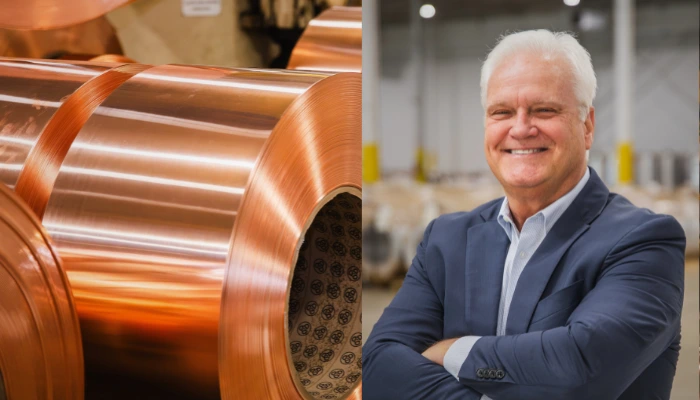
When you wind a transformer coil, there is no room for mistakes. A single bad edge or an out-of-spec copper strip can ruin an entire production run. It can tear insulation, fail electrical testing, or cause a field failure down the road.
In the decades I’ve spent in the metals industry, I’ve learned that a low price per pound means very little if the material slows down your winding floor. Price gets a supplier through the door. It’s quality, consistency, and plain old reliability that keep your shop running.
These days, sourcing copper coil for transformers is more of an engineering partnership than a basic commodity buy. If you’re evaluating a copper coil supplier for your transformer builds, here are six questions you should ask them—and what you should listen for in their answers.
1. How do you monitor and guarantee edge condition and burr height?
Transformer windings rely on delicate insulation layers like paper, Nomex, film, or enamel coatings. A heavy burr or a sharp copper sliver acts like a razor. As your winding machine pulls tension, that bad edge can cut right through the insulation. You might not notice the damage right away, but it will show up later during dielectric testing or after the unit is placed in service.
What to Ask Suppliers:
- What is your standard maximum burr height specification for slit copper coil?
- Do you perform in-house edge conditioning, deburring, or edge rounding?
- How often do your operators inspect, rotate, and resharpen slitter knives?
What to Listen For:
You want to hear clear, specific numbers rather than vague promises. A qualified supplier measures burr height consistently and keeps it well under standard commercial allowances. They should have a strict, documented schedule for blade maintenance.
2. What are your tolerances for width, thickness, and camber across the full length of the coil?
Camber is the lateral curvature along the length of a slit coil. If your copper strip has excessive camber, it will pull unevenly as it feeds onto your winding mandrel. That causes loose windings, uneven tension, telescoping coils, and operator frustration. Likewise, small variations in thickness or width will alter your core space factor and throw off your electrical design calculations.
What to Ask Suppliers:
- How do you measure and control camber on narrow-slit copper coil?
- What width tolerance can you hold on custom-slit material?
What to Listen For:
Tight, repeatable limits. For transformer applications, width tolerances should be tight—often within 0.005 inches or better depending on material gauge. If a supplier cannot give you a clear camber limit, your winding operators will likely struggle to work with the metal.
3. How do you verify electrical conductivity and chemical purity?
Transformer performance comes down to physics. If your copper lacks purity, electrical resistance increases. Higher resistance creates heat, lowers transformer efficiency, and makes it harder to meet Department of Energy (DOE) efficiency standards.
What to Ask Suppliers:
- Are you supplying copper with a guaranteed minimum 101% International Annealed Copper Standard (IACS) conductivity rating?
- Do you provide Mill Test Reports (MTRs) showing full chemistry and conductivity testing for every lot?
- Can I review the MTR prior to material delivery?
What to Listen For:
A reliable supplier will readily provide complete MTRs with full traceability back to the origin mill. The report should explicitly verify chemical composition and conductivity ratings. If a supplier hesitates to share MTRs or offers a basic “Certificate of Conformance” without actual mill test data, keep looking.
4. What is your process for surface cleanliness and contamination control?
Cleanliness is critical when winding coils. Residual slitting oils, metal dust, oxidation, or dirt can contaminate dielectric oil in liquid-filled transformers. In dry-type transformers, surface contaminants can weaken bond strength, disrupt varnish curing, and cause insulation tracking over time.
What to Ask Suppliers:
- What lubricants do you use during the slitting process, and how do you manage surface residue?
- Are your processing fluids compatible with transformer oil and insulation materials?
- How are finished coils wrapped and packaged to protect against moisture, tarnish, and shipping damage?
What to Listen For:
You want a supplier who understands the chemical sensitivity of transformer interiors. They should use low-residue lubricants or offer dry-slitting processes when required. Finished coils should be wrapped securely, banded properly, and mounted on sturdily built skids designed for heavy metal handling.
5. How do you help manage lead time security and material availability?
Utility infrastructure and industrial build schedules are demanding. If your copper coil arrives late, your winding line stops, and project deadlines slip. At the same time, volatility in the metal market makes stocking large amounts of raw inventory a financial risk.
What to Ask Suppliers:
- Do you offer stocking programs, such as blanket orders or dedicated safety stock?
- What are your typical lead times for custom-slit orders versus emergency releases?
- Do you source domestic material that complies with Build America, Buy America (BABA) or federal grid mandates?
What to Listen For:
Flexibility and local depth. A strong distributor acts as a buffer between your factory and the primary mill. They should maintain robust inventory reserves, offer transparent lead times, and be willing to stage slit material on their floor so it is ready to ship the moment you call for it.
6. When something goes wrong on our winding floor, how do you handle it?
Processing metal is practical manufacturing work. Even with rigorous quality controls, unexpected questions or setup issues can happen on the floor. What matters most is having a partner who answers the phone and steps up to help when you need answers fast.
What to Ask Suppliers:
- Will I have direct access to dedicated technical support specialists who know copper slitting?
- What is your corrective action process if we encounter a material issue during winding?
- How quickly can you inspect, replace, or re-slit material if a problem occurs?
What to Listen For:
Personal accountability. You don’t want a supplier that routes your urgent calls through an automated system or hides behind paperwork. You want a partner who listens to what happened on your machine, respects your schedule, and takes immediate responsibility to make it right.
Build a Reliable Copper Supply Chain
Qualifying a copper coil supplier isn’t just about getting the lowest quote. It comes down to finding a team that understands your shop floor, respects your standards, and keeps their promises.
If you’re reviewing your current copper supply chain or preparing for an upcoming transformer build, give me a call at Three D Metals. I’m always happy to answer your questions, talk through specifications, and help you find the right solution for your plant.
